The Evolution of Online Gaming: From Text-Based MUDs to Modern MMORPGs
Online gaming didn't begin with flashy graphics or subscription fees. It started with words on a black screen, a blinking cursor, and strangers typing commands into the void together. The journey from those humble origins to today's sprawling massively multiplayer online role-playing games is one of the most fascinating stories in entertainment history — and understanding it changes how you see every game you play today.
What Were MUDs and Why Did They Matter?
A MUD (Multi-User Dungeon) was a text-based multiplayer environment where players explored virtual worlds, fought monsters, and interacted with each other entirely through typed commands. The first MUD was created by Roy Trubshaw and Richard Bartle at the University of Essex in 1978, and it established something that would define online gaming forever: a persistent world that existed whether you were logged in or not.
What made MUDs genuinely revolutionary wasn't the technology — it was the social architecture. Players formed alliances, developed reputations, built rivalries, and created communities that outlasted any individual session. In an era before the modern internet, these were living, breathing social spaces.
The mechanics were surprisingly deep. Players could craft items, govern territories, write in-game lore, and even code new areas into some MUDs. This level of player agency wouldn't be matched in graphical games for another two decades. MUDs also introduced concepts that every modern MMORPG takes for granted: character progression, player-versus-player combat, crafting systems, and guild-like player organizations.
By the late 1980s and early 1990s, hundreds of MUDs were running on university servers and early internet connections. The player counts were small — dozens, sometimes a few hundred — but the communities were intensely loyal. People made real friendships, and some made lifelong partners, through text on a screen.
The Bridge Era — Early Graphical Online Games
The transition from text to graphics didn't happen overnight. Through the late 1980s and into the mid-1990s, a category of games emerged that kept the community-driven soul of MUDs while experimenting with visual interfaces. These titles are often overlooked, but they were the essential bridge.
Habitat, developed by Lucasfilm Games in 1986, was arguably the first graphical online world with persistent avatars and social interaction. Players could communicate, trade, and inhabit a shared 2D space — primitive by any modern standard, but conceptually ahead of its time. Neverwinter Nights (the 1991 AOL version, not the later BioWare RPG) brought a graphical user interface to a D&D-style online world and attracted tens of thousands of players through dial-up connections.
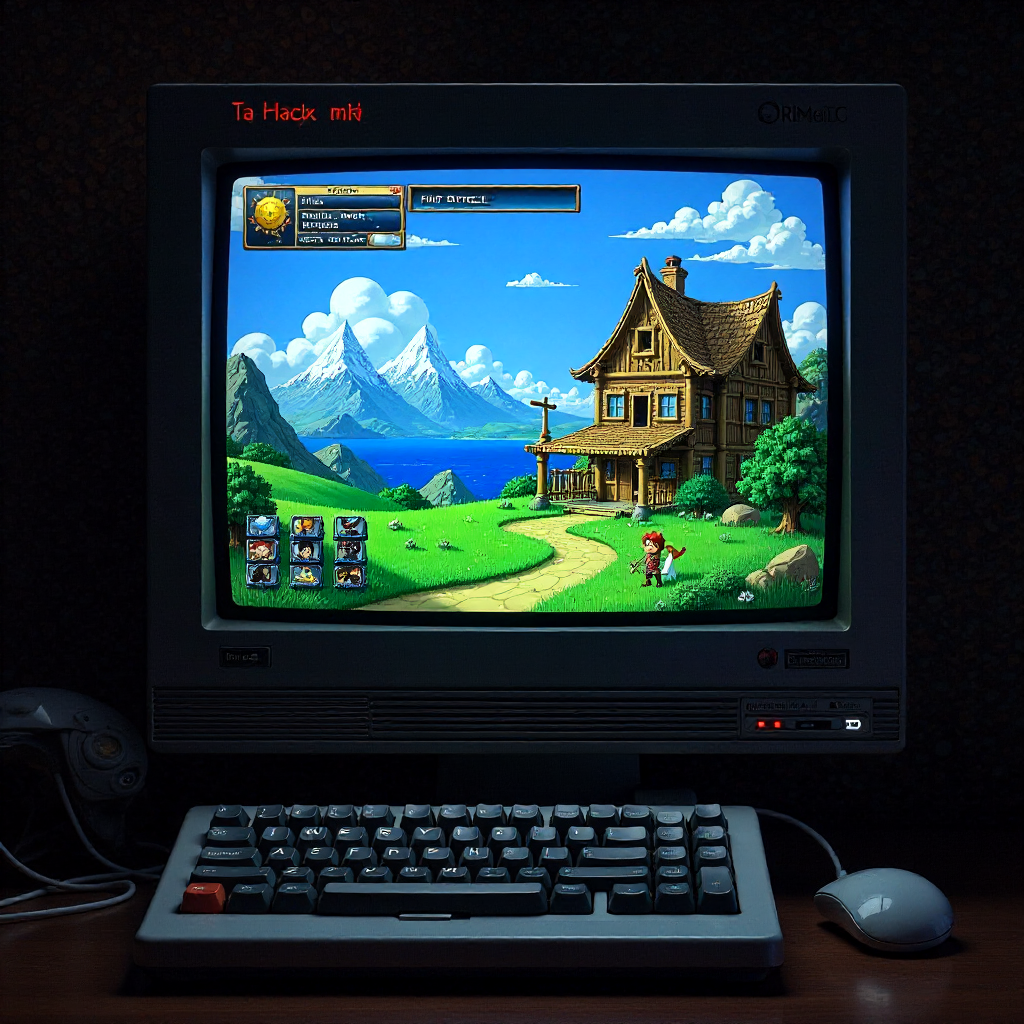
These games proved something critical: players would tolerate slow connections and clunky interfaces for the chance to share a virtual world with other people. The social pull was stronger than any technical limitation. That insight drove every major investment in online gaming infrastructure that followed.
The Rise of the First True MMORPGs
The MMORPG genre crystallized in the mid-to-late 1990s with three landmark titles that defined what the genre could be. Ultima Online launched in 1997 and became the first commercially successful graphical MMORPG, reaching 100,000 subscribers within months. Its open-world design, player-driven economy, and full PvP system created a genuinely emergent world — one where players shaped the narrative as much as the developers did.
Two years later, EverQuest raised the stakes dramatically. With a fully 3D world, deep class systems, and raid content designed for large groups, EverQuest introduced the template that most MMORPGs still follow. It also introduced something darker: the addictive loop of progression that kept players logged in for hours, days, and sometimes weeks at a stretch. At its peak, EverQuest had over 500,000 subscribers — a staggering number for 1999.
Both games established the defining features of the genre: persistent virtual worlds that continued evolving without you, character progression measured in hundreds of hours, and guild systems that turned strangers into tight-knit communities. The guild wasn't just a game mechanic. For many players, it was a social circle that rivaled anything in their offline lives.
How Technology Fueled the Online Gaming Boom
The MMORPG genre couldn't have grown without a parallel revolution in connectivity. Broadband internet adoption in the early 2000s was the single biggest enabler of large-scale online gaming. Dial-up connections — typically 56 kbps — made real-time 3D worlds frustrating at best and unplayable at worst. Broadband changed the equation entirely.
As cable and DSL connections spread across North America and Europe between 2000 and 2005, the potential audience for online games multiplied. Latency dropped. World sizes expanded. Server infrastructure became more sophisticated, allowing thousands of players to inhabit the same zone simultaneously without the game collapsing.
Hardware improvements ran in parallel. Consumer graphics cards from companies like NVIDIA and ATI (now AMD) made increasingly detailed 3D environments possible on home PCs. The combination of faster internet and better hardware created a window of opportunity that ambitious developers moved quickly to fill.
Server-side architecture also matured significantly. Early MMORPGs ran on relatively simple server setups that struggled under load. By the mid-2000s, distributed server architectures and improved database management meant that games could handle hundreds of thousands of concurrent players — not perfectly, but well enough to sustain a business.
World of Warcraft and the Mainstream Moment
World of Warcraft, released by Blizzard Entertainment in November 2004, didn't just join the MMORPG market — it redefined what the market could be. Within a year of launch, WoW had over five million subscribers. By 2008, that number had reached twelve million, a figure that remains unmatched in subscription-based online gaming history.
What Blizzard understood that others hadn't fully grasped was accessibility. EverQuest and its contemporaries were demanding games that punished mistakes heavily and required significant time investment just to get started. WoW lowered those barriers without removing depth. New players could be adventuring within minutes. The early game was forgiving. The endgame was as complex as anything that came before.
WoW also refined the guild and community systems that MUDs had pioneered two decades earlier. Raid guilds became genuine social institutions, with scheduled events, leadership hierarchies, and cultures that persisted for years. The player communities that formed around WoW generated their own content — fan fiction, artwork, videos, and eventually the machinima genre.
The subscription model — $15 per month — became the industry standard, and WoW's success convinced major publishers that online gaming was a mainstream entertainment category, not a niche hobby. Every MMORPG that followed was measured against it, for better or worse.
Modern MMORPGs — Where Online Gaming Stands Today
The modern MMORPG landscape looks quite different from the subscription-heavy world of 2005. The dominant shift has been toward free-to-play models, where games are free to download and play, with revenue generated through cosmetic items, expansions, or premium currency. Games like Final Fantasy XIV, Guild Wars 2, and The Elder Scrolls Online have found ways to sustain large player bases without requiring monthly fees.
Live-service updates have replaced the old expansion-every-two-years model. Modern MMORPGs push content patches on cycles measured in weeks, keeping active players engaged and giving lapsed players reasons to return. This approach creates a different kind of game — one that's never truly finished, always evolving.
Online game monetization remains a contested topic in the community. The line between cosmetic-only purchases (generally accepted) and pay-to-win mechanics (widely criticized) is one that developers navigate carefully. Player expectations around fairness have become more sophisticated, and studios that cross that line tend to face swift backlash.
Cross-platform play is another modern development that would have seemed impossible in the EverQuest era. Players on PC, console, and mobile can now share the same persistent worlds in some titles, dramatically expanding potential communities. The technical challenges of cross-platform development are significant, but the player experience benefits are driving widespread adoption.
What the Past Tells Us About the Future of Online Gaming
Every major leap in online gaming history has followed the same pattern: a new technology unlocks a new possibility, and the most successful developers use that possibility to deepen human connection, not just improve graphics. MUDs proved people would form real communities in virtual spaces. EverQuest proved they'd invest hundreds of hours in those spaces. WoW proved that accessibility and depth aren't mutually exclusive.
The trends shaping the next decade are already visible. Virtual reality is gradually maturing toward the point where immersive shared worlds become practical for mainstream players. Cloud gaming infrastructure is reducing the hardware barrier that still locks some audiences out of high-end online games. And artificial intelligence is beginning to change how game worlds respond to players — moving toward the kind of dynamic, reactive environments that MUD designers dreamed about but couldn't build.
The throughline from 1978 to today is consistent: players want to share meaningful experiences with other people in worlds that feel real enough to matter. The technology changes. That desire doesn't. Whatever online gaming looks like in 2035, it will still be built on the foundation that a group of university students laid on a server in Essex nearly fifty years ago.
Frequently Asked Questions
What is the difference between a MUD and an MMORPG?
A MUD is a text-based multiplayer game where players interact through typed commands in a shared virtual world. An MMORPG is a graphical, large-scale online role-playing game with visual environments and typically thousands of simultaneous players. MMORPGs evolved directly from MUD design principles but added visual interfaces, larger player capacities, and commercial infrastructure.
When did the first graphical MMORPG launch?
Ultima Online, launched in September 1997, is widely recognized as the first commercially successful graphical MMORPG. Earlier graphical online worlds like Habitat (1986) and Neverwinter Nights (1991) preceded it, but Ultima Online established the genre template at commercial scale.
Why did text-based online games decline in popularity?
Text-based MUDs declined primarily because graphical games offered a more immediately accessible and visually engaging experience for mainstream audiences. As broadband internet spread and hardware improved, graphical MMORPGs could deliver richer worlds without the learning curve of text commands. MUDs also faced competition from free graphical alternatives that required no technical knowledge to start playing.
Are MUDs still played today?
Yes. A dedicated community of players still actively plays MUDs, and several hundred active MUD servers continue operating. Some players prefer the imaginative depth and community focus of text-based worlds. Resources like The MUD Connector list active MUDs for anyone curious to explore the origins of online gaming firsthand.
What makes an online game qualify as an MMORPG?
An MMORPG typically requires four elements: a persistent virtual world that continues existing when players log off, a massively multiplayer environment (usually thousands of concurrent players), role-playing mechanics including character progression and customization, and an online-only structure where player interaction is central to the experience. Games missing one or more of these elements are generally classified differently — as online RPGs, co-op games, or multiplayer action games.