The Impact of Cloud Gaming on the Future of the Games Industry
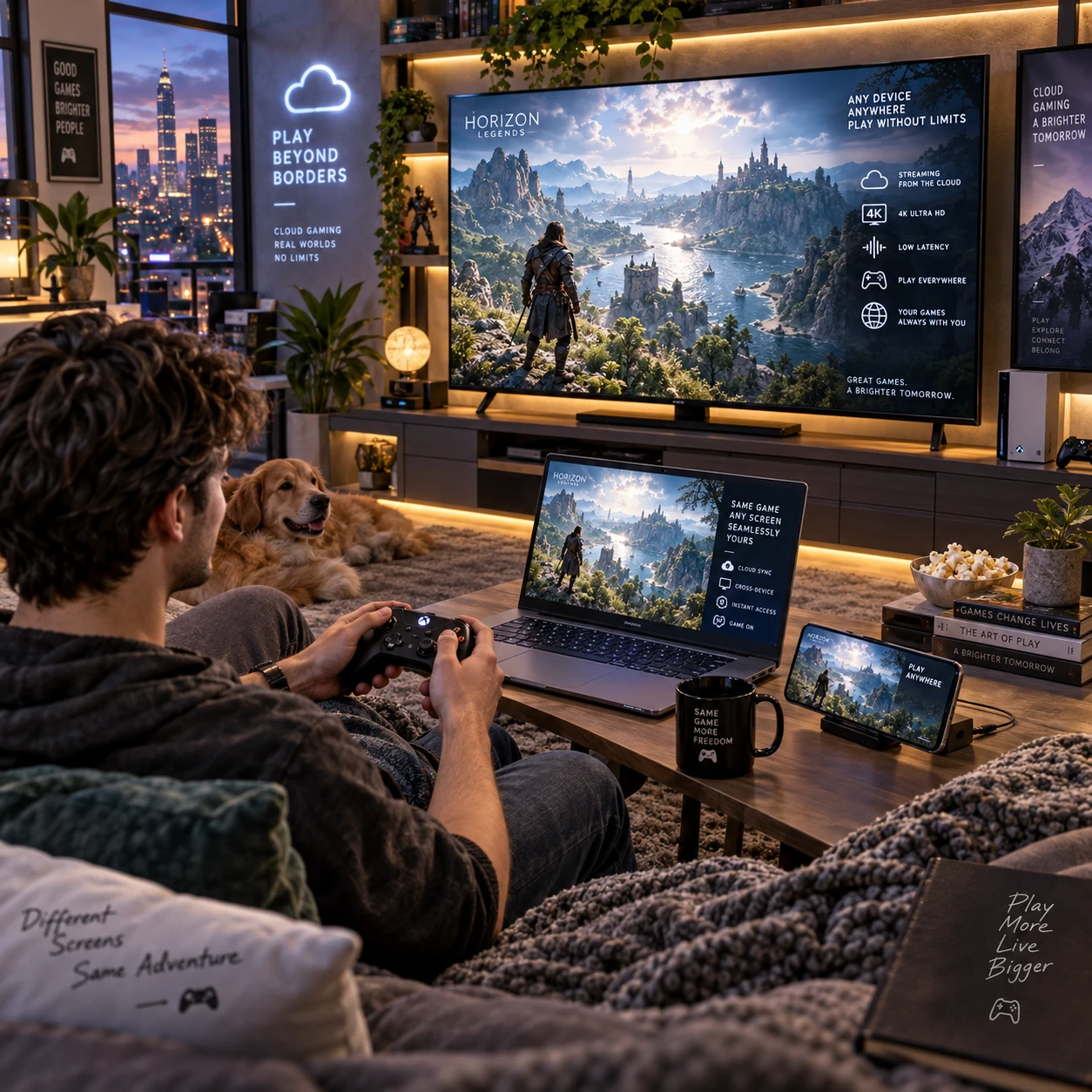
Cloud gaming could make high-end games available on more devices, alter how publishers sell access, and give developers new ways to reach players. Its impact will depend on practical details: internet connectivity, latency, service reliability, and whether subscription models offer lasting value.
For games and esports, the key question is not whether streaming can work. It already can. The question is where it offers a better experience than local hardware, and where the trade-offs remain too large.
What Cloud Gaming Is and How It Works
Cloud gaming runs a game on a remote server and streams the resulting video to a player’s device. The player’s controller or keyboard inputs travel back to the server, where the game responds and sends an updated picture.
In traditional gaming, a console, PC, or handheld does the work of rendering the game. With cloud gaming, the server handles that processing, using cloud infrastructure equipped with gaming hardware. The player’s device acts mainly as a screen and input device, much like a television receiving a live video feed, except the stream responds to each action.
This approach can let a modest laptop or phone run games that would otherwise require a powerful graphics card or current-generation console. It also changes the technical path between action and response: input must travel across the internet, be processed remotely, and return as video. That round trip introduces latency, the delay between a player’s action and the game’s reaction.
Cloud gaming is therefore different from downloading a game or using remote play from a home console. The game itself runs in a data center, and the quality of the experience depends on the service’s servers as well as the player’s network and device.
How Cloud Gaming Could Expand Access to Games
Cloud gaming can expand access by letting people play on devices they already own instead of buying gaming-specific hardware. That flexibility may lower the cost and space barriers to trying demanding games, provided a stable internet connection is available.
A player might start a game on a television, continue on a laptop, or try it on a phone without installing a large file or waiting for a download. This can make gaming more convenient for people with limited storage, older computers, or no room for a console setup. It can also help players sample a wider range of games before investing in equipment.
However, streaming shifts part of the access barrier from hardware to connectivity. A fast connection helps, but consistency matters too: congestion, Wi-Fi interference, data caps, and distance from a server can all affect image quality or responsiveness. Someone with a powerful PC and a weak connection may have a smoother experience locally than through a cloud service.
To judge whether cloud gaming fits, consider three practical checks:
- Connection stability: Test during the hours you normally play, not only when the network is quiet.
- Input sensitivity: Story-driven games may tolerate more delay than fighting games or precision shooters.
- Data use and access: Check your provider’s data limits and whether the service supports your devices and region.
Cloud gaming can improve player accessibility, but it does not remove every barrier. It replaces the cost of some local hardware with a greater reliance on internet service, compatible platforms, and continued access to the provider.
Shifting Platforms and Business Models
Cloud gaming could shift how gaming platforms distribute games, with subscriptions and streaming access sitting alongside purchases and downloads. For players, that may mean easier discovery; for publishers, it raises questions about ownership, revenue, and control of the customer relationship.
A subscription can bundle a changing library of games for a recurring fee, making it easier to try unfamiliar titles. Streaming may also reduce download friction: players can begin sooner, while platforms can promote games across televisions, computers, and mobile devices. These benefits depend on the catalogue, regional availability, and whether a particular game stays in the service.
The trade-off is that subscription access is not the same as owning a copy. A title can leave a library, a service can change its terms, or a cloud platform can shut down. Game purchases and local installs have their own limits, including storage needs and hardware compatibility, but they may offer more direct access to a game without an ongoing subscription.
Publishers must also weigh how platform deals affect pricing and audience reach. Streaming services may provide new discovery and distribution channels, yet they can make publishers more dependent on platform operators for visibility, payments, and player data. A sensible business strategy is likely to combine channels rather than assume one model will suit every game.
Opportunities and Challenges for Developers
Cloud gaming gives developers a way to reach players across more device types, but it also creates technical and commercial dependence on streaming platforms. The strongest opportunities come when broader access supports a game’s design and audience, not when streaming is treated as a guaranteed shortcut to success.
Developers may benefit from reaching people who do not own gaming PCs or consoles. A common server environment can also reduce variation in local hardware performance, while cloud platforms may simplify updates and let players jump into a game without a long download. Those gains can support demos, social play, and cross-device sessions.
But a streamed game still needs careful testing across networks, devices, and service settings. Developers may need to account for compression artifacts, variable latency, controller differences, and interruptions. Games built around precise timing can be especially sensitive. Cloud services also have costs for computing, bandwidth, and platform distribution, so wider reach does not automatically mean higher margins.
A useful design rule is to separate what the game needs from what the stream can reliably provide. Developers should test core actions under realistic network conditions, offer clear connection requirements, and avoid making essential gameplay depend on extremely tight response times unless the service can consistently deliver them. They should also consider what happens to players’ progress and purchases if a service changes or ends.
What Cloud Gaming Could Mean for Esports
Cloud gaming could make esports easier to access and watch, but competitive play depends on low, consistent latency and a fair technical environment. Streaming may suit some casual and spectator experiences sooner than it suits high-level competition.
For new players, cloud access could reduce the equipment needed to join a game community. Tournament organizers might also use streaming for demonstrations or remote access in settings where installing a full game locally is difficult. Viewers could benefit when cloud platforms make it easier to move between games or watch from different devices.
Competitive players face a stricter test. In a fast shooter, fighting game, or rhythm game, even small inconsistencies can affect timing and confidence. A stable average connection is not always enough: jitter, packet loss, and sudden quality drops can matter as much as headline speed. Cloud infrastructure can place servers closer to players, but network routes and local conditions still vary.
That makes cloud gaming a poor universal replacement for local tournament setups today. Organizers should evaluate each game, region, network, and competition format, then test performance under match conditions. For lower-stakes play, a little extra delay may be acceptable; for elite competition, consistent local hardware and tightly controlled networks remain easier to standardize.
The Road Ahead: Complement or Replacement?
Cloud gaming is more likely to complement consoles and gaming PCs than replace them across the whole industry. Its reach will grow where convenience and device flexibility outweigh the demands of latency, connectivity, and subscription access.
Local hardware remains valuable for players who want predictable performance, offline access, mod support, or the lowest possible input delay. Cloud gaming has a different strength: it can make a game available quickly on more screens without asking each player to buy a high-end machine. Many people may use both, choosing local play for demanding or competitive sessions and streaming for travel, testing, or casual play.
Several factors will shape adoption: the reach and reliability of broadband, the location and capacity of cloud infrastructure, the quality of game libraries, pricing, and how well platforms protect access to purchases and saved progress. Improvements in these areas can make streaming a stronger option, but they cannot guarantee that every player or game will benefit equally.
The practical future is likely to be a mix of delivery methods. Players should choose based on the games they play, their connection, and how much control they want over their library. Developers and publishers, in turn, will need to treat cloud gaming as a distinct distribution option with real opportunities and real operating costs.