VR Gaming: Is It the Next Big Thing in Online Entertainment?
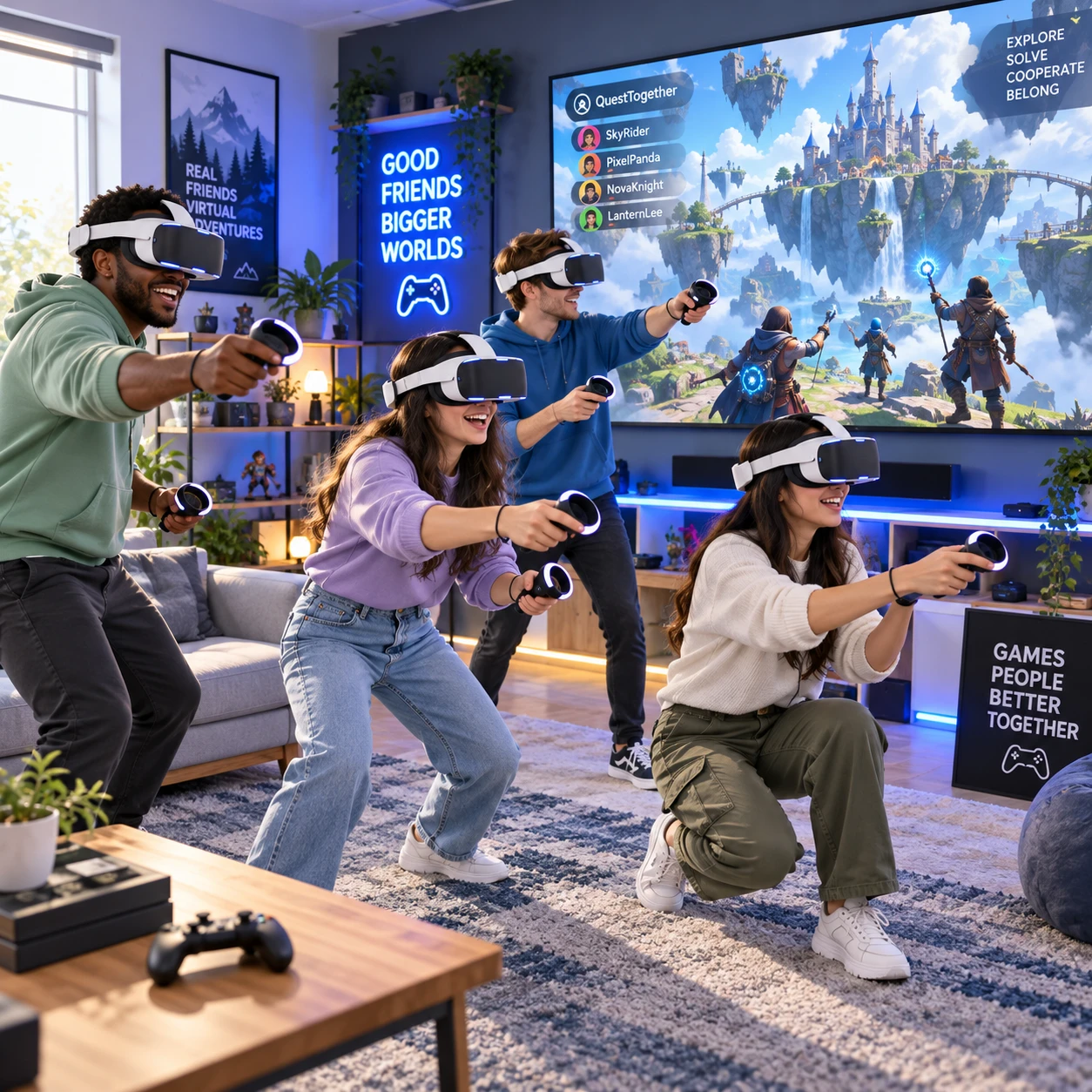
Virtual reality gaming puts players inside a digital environment, using a headset and motion controls to make looking, reaching, and moving part of play. It already offers online adventures and social spaces that traditional games cannot quite reproduce, but cost, comfort, and game selection still limit how widely people adopt it.
That makes VR a serious part of gaming’s future, though not a guaranteed replacement for screens and controllers. Its clearest advantage is presence: the feeling that you are physically in the game. Whether that becomes a mainstream habit depends on how well developers and hardware makers make the experience comfortable, affordable, and easy to share.
What Makes VR Gaming Different?
VR gaming uses a headset to display a 3D world around the player and motion tracking to connect their movements to the game. Instead of only pressing buttons to control an on-screen character, players can turn their heads, aim with their hands, and often use their bodies to interact.
A VR headset tracks head movement and updates the view as the player looks around. Many systems also track handheld controllers, while some support additional sensors or hand tracking. This creates immersive gameplay: opening a virtual door can mean reaching for its handle, and aiming a bow can involve drawing a controller back.
The difference changes how games communicate information. A traditional game can show a map or status bar at the edge of the screen; a VR game may place those details on a wrist device or in the environment. Players also need room to move, and rapid camera movement can feel uncomfortable for some people. VR design therefore involves more than adding a headset mode to an existing game. It must account for the player’s body, comfort, and surroundings.
The Rise of Social and Multiplayer VR
Yes, VR supports online multiplayer gaming, from cooperative missions to shared social spaces. Players can meet as avatars, communicate through voice chat, and interact with virtual objects together.
In a conventional multiplayer game, teammates may coordinate through voice chat while their characters remain on a screen. In social VR, players can face one another, gesture with tracked hands, and share a virtual activity. That extra sense of presence can make a casual conversation or cooperative puzzle feel more like spending time together in a place.
Social VR also depends on familiar online-community features: matchmaking, friend lists, moderation, and tools for muting or reporting others. Those details matter. A shared virtual room can feel welcoming when players have control over who joins, but intrusive behavior can be harder to ignore when another avatar is standing nearby. Good safety settings and clear community rules are part of the experience, not optional extras.
For gaming communities, the format works best when interaction is the point: building together, solving a problem, or hanging out between matches. It is less compelling when a game simply recreates a standard screen-based lobby without giving players meaningful ways to use their presence.
What VR Gaming Does Well
VR gaming is strongest when spatial awareness, physical movement, or hands-on interaction directly improve the game. It can make a player’s own actions feel like the controls, rather than translating every decision through buttons and menus.
That makes VR a natural fit for rhythm games, virtual sports, exploration, and puzzle-solving. A player might block an incoming object, reach for a tool, or look over a ledge to judge a route. These actions can create memorable moments because the player is actively doing them, not only watching a character do them.
- Presence: Looking around a detailed environment can make exploration feel immediate.
- Physical interaction: Grabbing, aiming, throwing, and manipulating objects can suit a game better than button commands.
- Cooperative play: Shared tasks can make teammates’ gestures and positions useful parts of communication.
- Movement-based challenge: Some games turn dodging, swinging, or dancing into core mechanics.
These strengths come with a trade-off: a game that asks players to move can be tiring, and the same interactions may not work for every player. The most effective VR games offer adjustable movement and control options, rather than assuming everyone wants or can manage a physically demanding session.
The Challenges Holding VR Back
VR gaming is held back by the combined cost of equipment, comfort concerns, accessibility needs, and a smaller game library than traditional gaming. A headset can be easy to set up and still be the wrong fit for a player’s budget, room, or preferences.
Some headsets work as standalone devices, while others connect to a gaming PC or console. Standalone models avoid the extra cost and setup of a powerful PC, but performance and game availability can differ. PC VR can support demanding experiences, though the headset is only one part of the purchase. Before buying, check which platform a game supports and whether your existing hardware is compatible.
Comfort varies by person and game. Headset weight, facial fit, heat, and motion sensitivity can all affect a session. A player who feels discomfort during smooth artificial movement may prefer teleport-style movement or shorter sessions. Room-scale games also require a clear play area, and players need to stay aware of furniture, pets, and other people nearby.
Accessibility is broader than physical space. Players may need seated modes, adjustable text, one-handed controls, or options that reduce rapid movement. Developers do not provide these features consistently, so it is sensible to check a game’s control and accessibility options before purchasing.
The library is another consideration. VR has distinctive games and experiences, but it does not match the breadth of traditional PC and console catalogs. Choosing a headset for one anticipated release can be disappointing if that title changes or does not suit your play style. Look at the available games you would actually play now, not only the technology’s potential.
VR and the Future of Esports
VR can support competitive gaming, but it faces practical barriers before it can match the scale of established esports. A fair competition needs consistent hardware, reliable tracking, clear rules, and viewing formats that help spectators understand the action.
Motion-based play can create a high skill ceiling: players may need precise timing, aim, movement, and spatial awareness. Yet performance can depend on headset tracking, room setup, and physical stamina as well as game knowledge. Organizers must decide how to standardize equipment and play spaces so that matches reward skill rather than a hardware advantage.
Spectating presents a separate challenge. A player’s first-person headset view may be disorienting to watch, while an external camera angle may not show exactly what the competitor sees. Broadcasts need readable viewpoints, useful overlays, and replay tools that explain fast decisions. Until those systems become familiar to audiences, VR esports may find stronger footing in dedicated events and smaller competitive communities than in broad mainstream leagues.
That is a real opportunity, but not a promise of rapid expansion. VR’s future in esports will depend on games that are enjoyable to watch as well as play, and on dependable event setups that work outside a player’s home.
So, Is VR Gaming the Next Big Thing?
VR gaming is a meaningful part of online entertainment’s future, but widespread adoption is not inevitable. Its immersive controls and social presence offer experiences that screen-based games cannot fully copy, while cost, comfort, accessibility, and game choice remain real barriers.
A useful way to judge VR is the fit test: does the game benefit from physical presence, can you use the hardware comfortably, and is there enough content you want to play? If all three answers are yes, a headset can add a genuinely different kind of gaming. If you mostly want long sessions with a broad library and familiar controls, a PC or console may still suit you better.
VR does not need to replace traditional gaming to matter. It can grow as a distinct format for immersive gameplay, multiplayer communities, and new competitive ideas. The next big thing may be a more varied gaming landscape, with VR earning its place where being inside the game makes play better.
Frequently Asked Questions
What equipment do you need to play VR games? At minimum, you need a compatible VR headset and the controllers or tracking method required by the game. Some headsets operate on their own; others need a compatible PC or console. Check the game’s platform requirements and make sure you have enough clear space for its movement style.
Can you play online multiplayer games in VR? Yes. Many VR games offer online cooperative or competitive modes, and social VR platforms let players meet in shared virtual spaces. Features and player communities vary by game, so check whether it supports cross-play and whether your friends use the same platform.
Is VR gaming suitable for esports? It can be. VR games can reward precision, movement, and spatial awareness, but tournament growth depends on consistent hardware, fair rules, accessible venues, and spectator-friendly broadcasts.
What are the main drawbacks of VR gaming? The main drawbacks are headset and hardware costs, comfort or motion sensitivity, room-space needs, accessibility gaps, and a smaller game selection than traditional platforms. These limits affect players differently, so trying a headset before buying can help.